Natural gas prices plunged on Tuesday, after Freeport LNG said its facility that had a fire last week likely won’t be back up and running soon.
″[C]ompletion of all necessary repairs and a return to full plant operations is not expected until late 2022,” the company said Tuesday in a statement. The facility, located in Quintana Island, Texas, had an explosion last Wednesday.
“Given the relatively contained area of the facility physically impacted by the incident, a resumption of partial operations is targeted to be achieved in approximately 90 days,” Freeport LNG said.
U.S. natural gas fell about 16% to $7.22 per million British thermal units (MMBtu).
“The U.S. natural gas market will now be temporarily oversupplied as 2 bcf/d or a little over 2% of demand for U.S. natural gas has been abruptly eliminated,” said Rob Thummel, managing director at Tortoise Capital.
“U.S. natural gas supply will likely remain at current levels as producers won’t reduce production by 2 bcf/d. The result is an oversupplied U.S. natural gas market,” he added.
Freeport’s operation is roughly 17% of the U.S.′ LNG processing capacity.
Despite Tuesday’s drop, natural gas prices are still up 93% since the start of the year. Demand has rebounded as worldwide economies emerge from the pandemic, while supply has remained constrained.
Russia’s invasion of Ukraine upended a market that was already tight. As Europe looks to move away from Russian energy, record amounts of U.S. LNG are now heading to the continent.
Surging prices are adding to inflationary pressures across the economy. Drivers are already grappling with record prices at the pump with the national average for a gallon of gas topping $5 over the weekend, and now utility bills are also set to rise.
Natural gas prices surged above $9 per MMBtu in May, hitting the highest level since August 2008.
After the explosion at Freeport’s facility last week, the company initially said the plant would be shut for several weeks.
“The incident occurred in pipe racks that support the transfer of LNG from the facility’s LNG storage tank area to the terminal’s dock facilities,” the company said Tuesday. “None of the liquefaction trains, LNG storage tanks, dock facilities, or LNG process areas were impacted,” the company added.
(Bloomberg) — OPEC+ agreed to open its oil taps faster in the summer months, a gesture of reconciliation to the U.S. that nevertheless keeps Russia at the heart of the cartel.
Putin: The White House welcomed the deal, which came after months of diplomatic pressure on Saudi Arabia to mitigate the surge in energy prices that’s battered the economy since President Vladimir Putin’s decision to invade Ukraine.
The modest supply boost — amounting to just 0.4% of global demand over July and August — may ease tight markets. But it leaves unanswered the question of whether the U.S. can turn Saudi Arabia into an ally in its campaign to economically isolate Russia.
“The frost is melting in Saudi-US diplomatic relations, but it will take more progress before full normalization,” said Bill Farren-Price, a director at Enverus Intelligence Research. “Whether the U.S. will be able to drive a wedge between Riyadh and Moscow is a bigger challenge.”
Before Thursday’s OPEC+ meeting, oil had fallen on reports that Saudi Arabia and other members were prepared to fill the gap in the market created by Western sanctions on Russian oil, or even remove the country from the OPEC+ quota system altogether. Russia’s output has already fallen by about 1 million barrels a day since the start of the war and may drop further after the European Union agreed further sanctions on its oil.
The policy shift eventually agreed upon by the Organization of Petroleum Exporting Countries and its allies was far less dramatic. The group approved oil-production hikes of 648,000 barrels a day for July and August, about 50% larger than the increases seen in recent months. Moscow gave the plan its full backing and talks were concluded in just 11 minutes, delegates said, asking not to be named because the information was private.
The deal was “a pretty minor tweak,” said Farren-Price. Given the cartel’s recent struggles to hit its production targets, several analysts predicted that the additional volumes that would actually reach the market would be much smaller than the headline figure.
Oil reversed earlier losses, with West Texas Intermediate crude rose 1.4% to settle at $116.87 a barrel in New York on Thursday.
U.S. Pressure
Biden: Opening the taps even just a little wider is still a turnaround for Saudi Arabia. The kingdom doggedly stuck to the OPEC+ plan for gradual monthly supply increases even after Russia’s invasion of Ukraine upended global markets and sent energy prices soaring. Last week, the Saudi foreign minister said there was nothing more the country could do to tame oil markets, and even suggested there was no shortfall of crude.
Thursday’s shift suggests that political pressure from the White House is bearing fruit. U.S. President Joe Biden will visit Saudi Arabia to meet with Crown Prince Mohammed bin Salman, the New York Times reported. The US president blames him for the 2018 murder of a U.S.-based columnist, but with record high gas prices weighing on his party’s political prospects, pressure has grown on Biden to repair relations.
“The United States welcomes the important decision from OPEC+ today to increase supply,” said White House Press Secretary Karine Jean-Pierre. “We recognize the role of Saudi Arabia as the chair of OPEC+ and its largest producer in achieving this consensus.”
The OPEC+ output increase will be divided proportionally between members in the usual way. Countries that have been unable to raise production, such as Angola, Nigeria and most recently Russia, will still be allocated higher quotas, meaning the actual supply boost may be smaller than the official amount — as has often been the case in recent months.
“Will the target increase actually translate into a meaningful uptick in the number of real barrels reaching the oil market?” Giovanni Staunovo, a strategist at UBS Group AG, wrote in a note. He estimated that “effective production increases will likely be about half of the target.”
Only Saudi Arabia and the United Arab Emirates have enough spare capacity to offset a significant portion of the supply gap created by sanctions on Russia. Much of that will remain untapped even after the July and August production increases, setting up a crucial OPEC+ meeting in two months that could determine whether the US and Europe persuade their Gulf allies to break further from Moscow.
“This does lay the groundwork potentially for a Biden visit at the end of the month, and maybe we could see some further increases from September onwards,” Amrita Sen, co-founder and research director at Energy Aspects Ltd., said in an interview. At the same time, “OPEC+, and particularly Saudi Arabia, want to continue with the group.”
OPEC expects oil demand growth to slow significantly next year
Grant Smith 6/14/2022
(Bloomberg) — OPEC expects the pace of oil demand growth to halve next year as inflation and conflict grip the global economy.
World oil consumption will expand by 1.8 million barrels a day, down from the 3.4 million a day anticipated this year, the group’s preliminary projections show, according to a delegate. The outlook will be reviewed by representatives from the group’s member states next week.
The Organization of Petroleum Exporting Countries and its allies surprised traders earlier this month by agreeing to speed up the return of production halted during the pandemic, assenting to US entreaties for more oil after months of refusal.
How quickly the few members still holding spare capacity restore their remaining offline barrels will be debated in the coming weeks and months. With most OPEC+ nations already pumping at their limit, idle reserves are confined to the Saudi Arabia, the United Arab Emirates, Iraq and Kuwait.
The world economy will pay a “hefty price” for the war in Ukraine encompassing weaker growth, stronger inflation and potentially long-lasting damage to supply chains, the OECD said last week.
The UK’s North Sea Transition Authority (NSTA) on Tuesday is launching the UK’s first-ever carbon storage licensing round with 13 areas of potential available.
The new carbon storage areas, alongside the six licences which have already been issued, could have the ability to make a significant contribution towards the aim of storing 20 million to 30 million tonnes per annum of carbon dioxide by 2030.
The areas being offered for licensing are off the coast of Aberdeen, Teesside, Liverpool and Lincolnshire in the southern North Sea, central North Sea, northern North Sea and East Irish Sea and are made up of a mixture of saline aquifers and depleted oil and gas field storage opportunities.
The NSTA said this licensing round is envisaged to be the first of many as it is estimated that as many as 100 CO2 stores could be required to meet the UK’s net zero target by 2050.
Carbon capture and storage involves the capture of CO2 emissions from industrial processes and will play a crucial role in decarbonising the UK’s major industrial hubs such as Teesside and Humberside. This CO2 is then transported via ship or a pipeline and stored in subsurface geological formations.
The NSTA added it has launched this carbon storage licensing round in response to “unprecedented levels of interest” from companies eager to enter the market.
Article continues below the advert
“The areas on offer have a combination of attributes such as the right geological conditions, proximity to existing infrastructure which may be able to be repurposed and links to industrial clusters which are looking to carbon storage to help meet their decarbonisation goals.
“The level of interest already expressed suggests there will be strong competition meaning that prospective licensees will need to produce high-quality bids to win licences.”
The authority said that in selecting the areas to be offered, it fully considered issues including co-location with offshore wind — whether there are any known challenges and mitigations around existing or future offshore wind developments — environmental issues, potential overlaps with existing or future petroleum licences, and other activities to ensure key technologies can all be taken forward.
“This is an important day on the path to net zero emissions. In addition to the huge environmental benefits of significantly reducing carbon dioxide emissions into the atmosphere, the facilities will provide opportunities for many thousands of highly skilled jobs,” said NSTA chief executive Andy Samuel.
“Carbon storage is going to be needed across the world. There is growing investor appetite and we are keen to accelerate development of the carbon storage sector so that UK is well-positioned to be a global leader.
“The NSTA is ready to work with industry, government, regulators and others to deliver these exciting projects at pace.”
There are currently six carbon storage licences on the UK continental shelf, which could meet up to one-fifth of storage needs if they reach their maximum potential of up to 40 million tpa injection rates by the mid-2030s.
Whilst the capacity estimates of the areas offered in this round come with some uncertainty, they have the potential to make a very significant contribution to decarbonisation of the UK.
The application window is open for 90 days, closing on 13 September, and will be evaluated by the NSTA on technical and financial criteria.
It is expected that any new licences will be awarded in early 2023. The size and scale of the licensed stores mean that they are likely to proceed at different paces, but first injection of CO2 could come as early as four to six years after the licence award.
In addition to being awarded a licence from the NSTA, successful applicants will also need to obtain a lease from The Crown Estate or Crown Estate Scotland, depending on location, before they can progress a project.
CO2 will typically be stored at depths greater than 800 metres, where it no longer behaves as a gas, but instead as a supercritical fluid. Geological formations such as the Triassic Bunter formation and Tertiary Forties sandstones that are well understood in the UK from many decades of oil and gas production are also likely to be ideal for the storage of carbon dioxide, according to the NSTA.
“We’re determined to make the UK a world leader in carbon capture, which will be crucial in helping us reduce emissions and protect the viability and competitiveness of British industry,” said Energy & Climate Change Minister Greg Hands.
“This licensing round is an important step in making this a reality, helping support new jobs across the UK and encouraging investment in our industrial heartlands.”
Brazil’s federal oil firm Petrobras launched a tender to charter pipelay support vessels (PLSVs) for 1,410 days.
The process calls for the contracting of Brazilian and foreign-flagged boats able to begin operations by July 2023 or 180 days after contract signing.
If national PLSVs do not meet Petrobras’ demand, the firm may hire the foreign vessels offered in the tender.
Commercial proposals will be opened on June 29.
Requesting anonymity, a top executive of a PLSV operator in Brazil told BNamericas that the tender will add vessels to Petrobras’ fleet, which currently comprises 17 units.
In recent years, the oil company’s PLSV tenders were mostly designed to replace contracts due to expire.
OQ Trading (OQT) has become one of the first corporates to nominate Komgo as Digital Agent on their flagship borrowing base managed by ING, following renewal of the facility in mid-June 2021.
Following successful deployment of Komgo’s ‘Konsole’ and ‘Trakk’ solutions, OQT has invested in further data activation via Komgo’s professional services team, to enable more automated and intelligent functionality at scale across their trading business.
The first implementation will automatically generate and send to ING the relevant Notice of Assignment (NOA) based on data embedded in sales invoices, without any human intervention. This application will be scaled to 80% of the trade portfolio by mid-2022, for an estimated 8 man hours saved per week. A similar setup is deployed for the generation of utilisation requests on the purchase side.
OQT’s invoice’s will also be registered on Track, adding extra comfort and security by enabling counterparties to verify their authenticity on OQT’s website rather than call-back. Trakked documents can be given extra status through the addition of verifiable counterparty activity to create a digital audit trail and real-time visibility on a document’s status.
Our objective is to lead the industry in terms of efficiency and sustainable value. For many of our banks and partners, this value comes through increased security and reliability of data, the ability to automate tasks and report on demand. Komgo’s Digital Agent is gathering verified data from across their trusted network to provide highly contextualised reporting and supplementing existing data flowing from our internal systems.
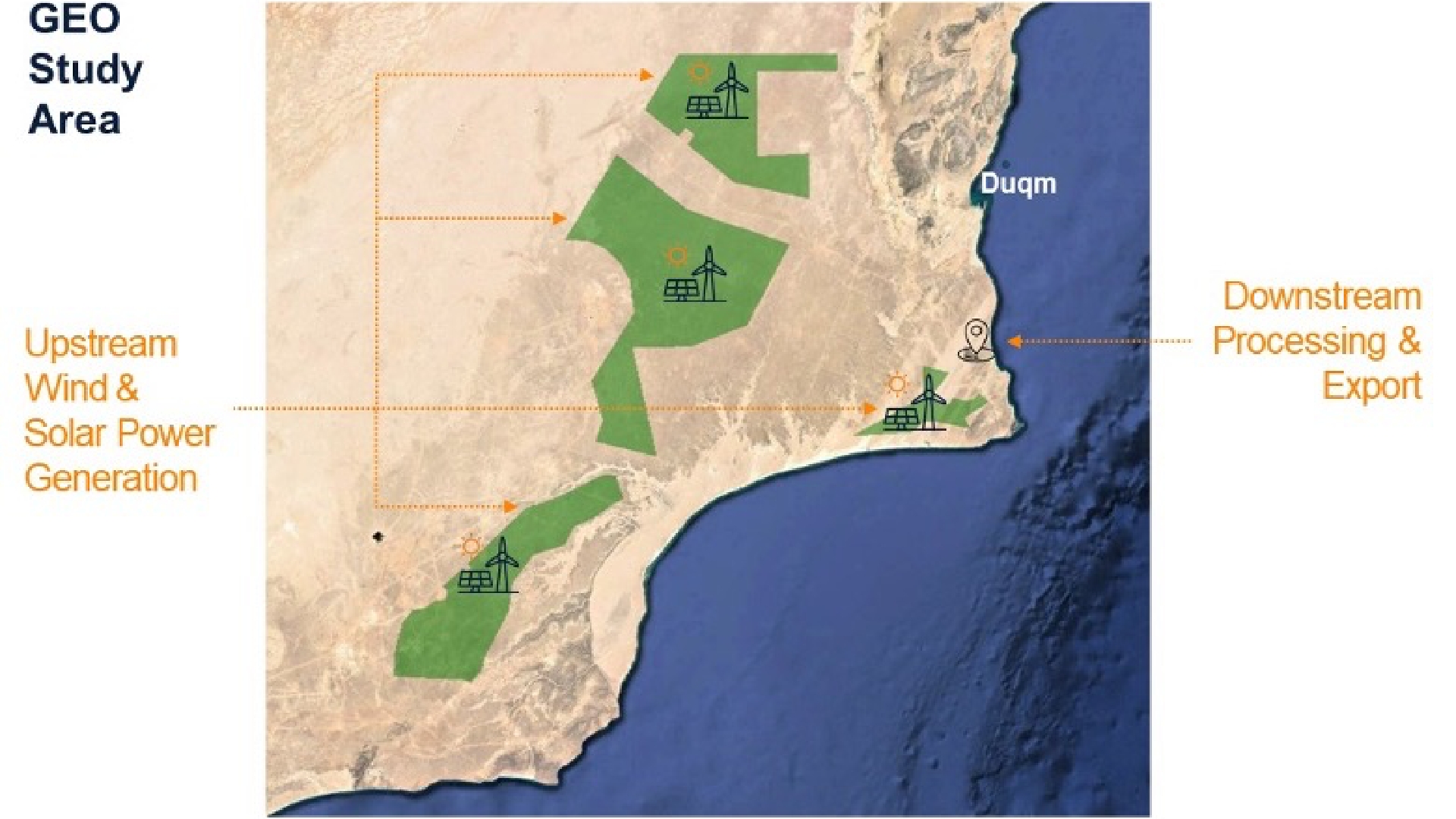
Engineering and environmental studies are building on a comprehensive wind & solar measurement campaign to further define and enhance the benefits of the GEO 25-gigawatt green fuels project.
An international consortium comprised of OQ, the Sultanate of Oman’s global integrated energy company, InterContinental Energy, the leading dedicated green fuels developer, and EnerTech, a Kuwait government-backed clean energy investor and developer, today announces further progress on the development of “GEO” the Green Energy Oman integrated green fuels mega project.
The consortium is collaborating on the project, which will consist of approximately 25 gigawatts (GW) of renewable solar and wind energy producing over 1.8 million tons of zero-carbon green hydrogen per annum.
Najla Zuhair Al Jamali, CEO Alternative Energy at OQ said: “The GEO team, together with our technical specialists, are at the vanguard of mega-scale green fuels project development. The work being undertaken will place Oman at the forefront of such projects, maximizing the utilization of Oman’s natural resources of wind and solar to produce green fuels, and build the country’s associated industry. We look forward to continuing development in collaboration with our partners.”
Having deployed a series of 140m high meteorological masts across the site since 2019 the consortium has gained significant understanding of site issues and opportunities, and last year awarded a series of key studies to progress the project:
Energy Yield Assessment – being conducted by DNV (www.dnv.com) this activity is refining the output available from the world-class wind and solar resource found across the Al Wusta governate in Oman.
Feasibility Study – Worley Group (www.advisian.com) is contracted to further develop the project defined by the consortium, optimising the wind & solar generation, the transfer and transformation of this energy through electrolysis into hydrogen, and ultimately the production, storage and export of ammonia.
Environment & Social Impact Assessment – HMR (www.hmrenv.com) are providing critical support to the project based on two decades of experience in Oman, and the recognition that the scale of the project requires a close focus on local issues and impacts, to ensure that the benefits the project will bring are fully realised.
Working with these specialists, the GEO team is further developing and refining the project, its export value, and the potential for expansive development of Oman’s skills base and technical expertise in renewable energy projects.
Shaheen is the first private UAE company to partner with TA’ZIZ as a standalone investor
Agreement unlocks new opportunities for Shaheen and UAE manufacturers, enabling private sector growth and capability development
Strategic partnership to produce new chemicals in the UAE, including Chlor-Alkali, Ethylene Dichloride and Polyvinyl Chloride at the TA’ZIZ Industrial Chemicals Zone
Agreement is aligned with UAE industrial development strategy, catalysing the UAE’s industrial base and enabling UAE companies to ‘Make it in the Emirates’
Abu Dhabi, UAE – May 12 2022: Abu Dhabi Chemicals Derivatives Company RSC Ltd (“TA’ZIZ”) announced today that Shaheen Chem Holdings Investment LLC (Shaheen), will join the proposed TA’ZIZ and Reliance Industries Limited TA’ZIZ EDC & PVC joint venture, that will construct and operate a world-scale Chlor-Alkali, Ethylene Dichloride (EDC) and Polyvinyl Chloride (PVC) facility, at the TA’ZIZ Industrial Chemicals Zone, in Ruwais.
The TA’ZIZ Industrial Chemicals Zone is a joint venture between ADNOC and ADQ. With an investment of more than $2 billion (AED7.34 billion), the project will supply local manufacturers, replacing chemicals currently imported, while also exporting to meet growing demand for these chemicals globally. TA’ZIZ will provide new opportunities for local manufacturers, supporting growth of their knowledge and capabilities, catalyzing local industrial development.
Shaheen brings extensive knowledge of the local market and joins the project with a focus on utilizing production for use in local supply chains. The agreement marks the first direct investment by a privately-owned United Arab Emirates (UAE) company in the TA’ZIZ Industrial Chemicals Zone. It also follows the investment agreements between TA’ZIZ and eight UAE-based investors in December 2021, which marked the first domestic Public Private Partnership (PPP) in Abu Dhabi’s downstream and petrochemicals sector.
Khaleefa Yousef Al Mheiri, TA’ZIZ Acting Chief Executive Officer, said: “We are delighted to welcome Shaheen as a strategic partner in TA’ZIZ. This strategic agreement further consolidates TA’ZIZ’s position as the sought-after partner for local and international investment in the UAE’s chemicals industry. The partnership supports our national strategy to drive the growth and diversification of the country’s industrial base, strengthen domestic supply chains and enable the private sector to “Make it in the Emirates”, in line with the leadership’s wise directives.”
The chemicals to be produced by the TA’ZIZ EDC and PVC project have a wide range of industrial applications and will create opportunities for export, as well as providing local industry with a source of critical raw materials manufactured in the UAE for the first time.
Walid Azhari, Managing Director of Shaheen, said: “We are honored to partner with TA’ZIZ and Reliance in this world class industrial plant which will include the largest Chlor Alkali plant in the world. We are looking forward to working with our partners during the development, construction and operation stages of the project. This project will be the cornerstone for many exciting downstream opportunities which will create a whole new industrial cluster in the UAE, in line with the Abu Dhabi Economic Vision 2030”.
Investment in the production of chemicals is a priority for the UAE’s industrial growth strategy, championed by the Ministry of Industry and Advanced Technology, which aims to raise the UAE’s industrial sector’s contribution of national GDP to AED300 billion by 2031. Chemicals are an attractive sector given projected demand growth globally and the opportunity local production creates to grow the UAE’s industrial base.
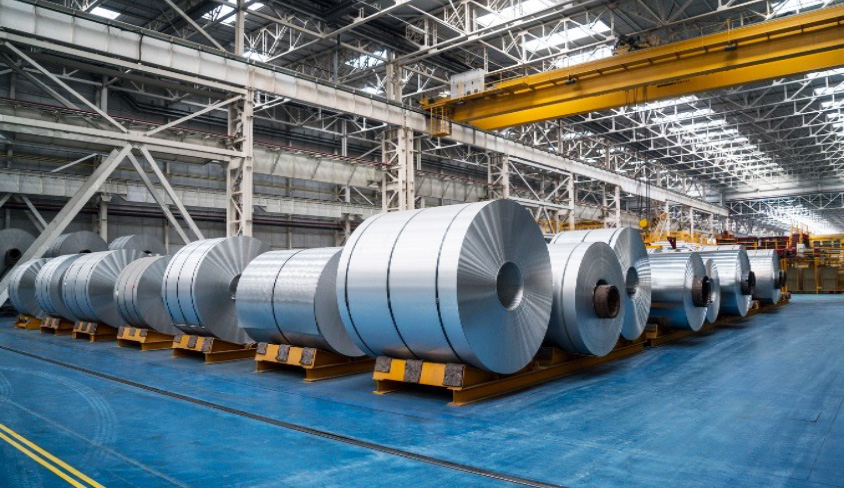
Chlor-Alkali enables the production of caustic soda, crucial to the production of aluminum, and EDC is used in the production of PVC for a wide range of industrial and consumer products including pipes, windows, cables, films and flooring.
TA’ZIZ comprises three zones, the first of which is an Industrial Chemicals Zone that will host chemicals production, with seven world-scale projects already in the design phase. The second is a Light Industrial Zone, which will be home to downstream conversion industries that will convert the outputs of the Chemicals Zone into consumable products. The third is an Industrial Services Zone that will house a variety of companies providing the services required by the TA’ZIZ industrial zones and the wider Ruwais Industrial Complex.
All projects in the TA’ZIZ Industrial Chemicals Zone are subject to customary regulatory approvals.
His Highness commended ADNOC’s expanded approach to strategic partnerships, which have supported new oil discoveries in Bu Hasa field, Onshore Block 3, and Al Dhafra
His Highness gave directives to explore new clean hydrogen partnerships to help accelerate the energy transition
His Highness praised ADNOC’s contribution to strengthening UAE capital markets through plans to float 10% of Borouge on ADX
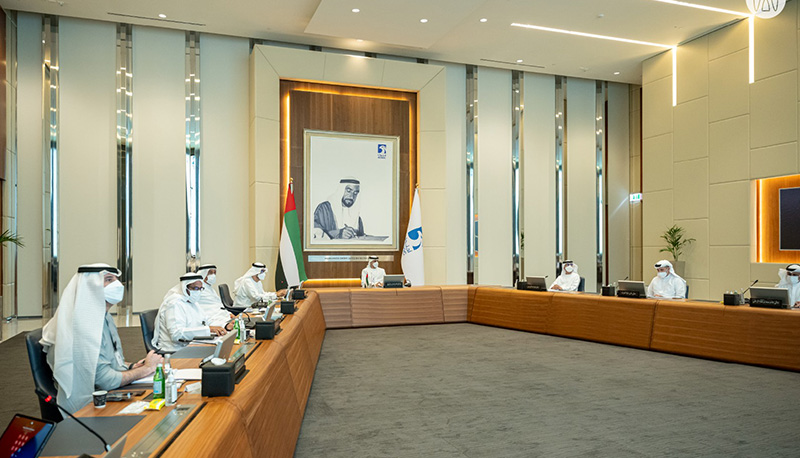
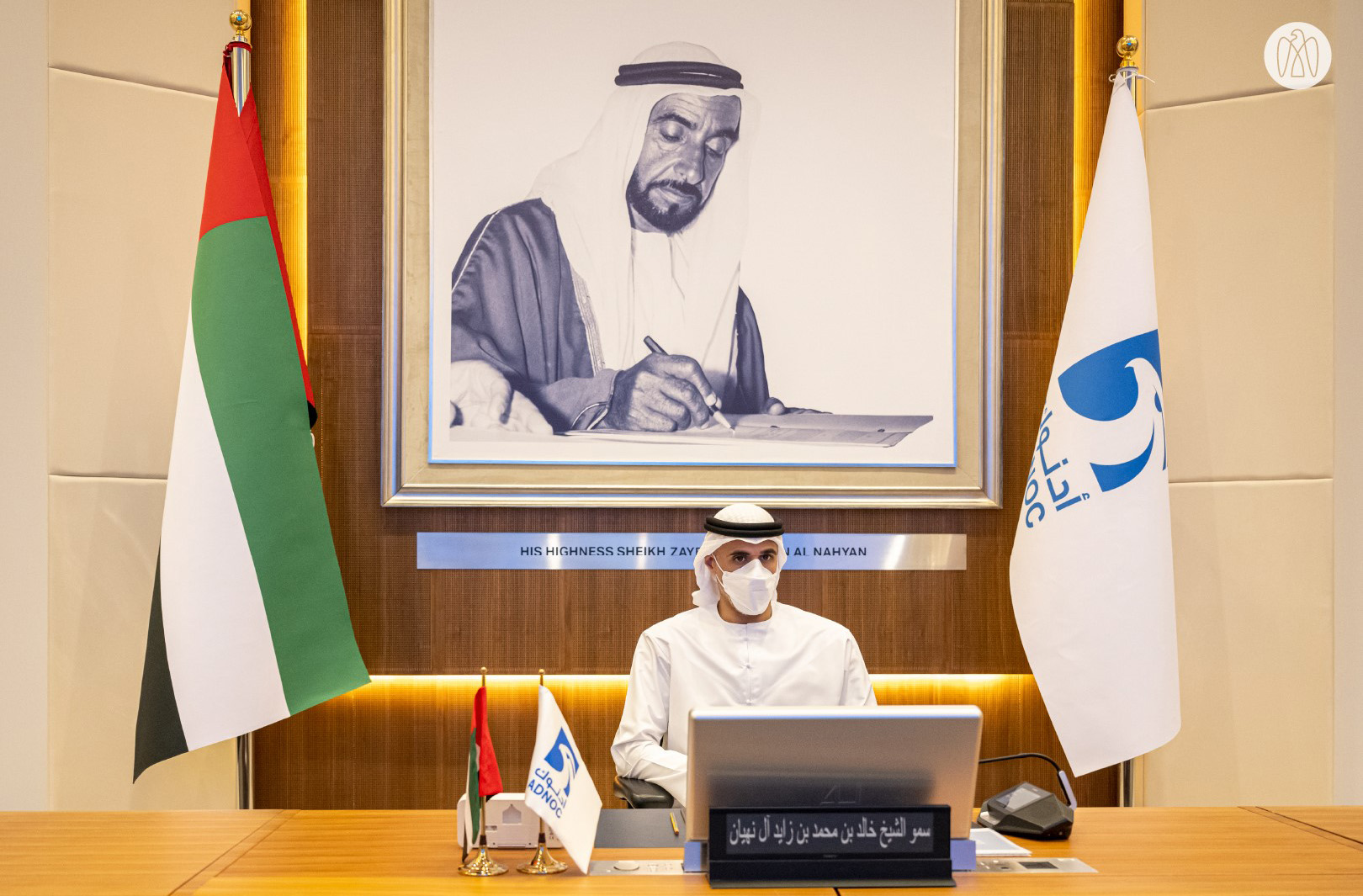
Abu Dhabi, UAE – 19 May, 2022: His Highness Sheikh Khaled bin Mohamed bin Zayed Al Nahyan, member of the Abu Dhabi Executive Council and Chairman of the Abu Dhabi Executive Office, has chaired a meeting of the Executive Committee of the Abu Dhabi National Oil Company (ADNOC) Board of Directors.
During the meeting, held at ADNOC Headquarters in Abu Dhabi, His Highness reviewed ADNOC’s performance and strategic targets and commended the company’s expanded approach to strategic partnerships, which have helped lead to new discoveries of oil, including a new find at Bu Hasa, Abu Dhabi’s biggest onshore field with a crude oil production capacity of 650,000 barrels per day (mbpd).
The 500 million barrels of oil discovered from an exploration well in the Bu Hasa field has unlocked a new formation within the field, offering substantial additional premium-grade Murban oil resources. Bu Hasa is part of the ADNOC Onshore Concession and is operated by ADNOC Onshore.
In Abu Dhabi’s Onshore Block 3, operated by Occidental, around 100 million barrels of oil in place were discovered, marking the second oil find in this concession. Occidental was awarded the exploration rights for Onshore Block 3 in early 2019. Around 50 million barrels of light and sweet Murban-quality crude was also discovered in the Al Dhafra Petroleum Concession, operated by Al Dhafra Petroleum, a joint venture between ADNOC, the Korea National Oil Company (KNOC) and GS Energy.
His Highness commended ADNOC for its collaborative approach and noted that the company and its partners would ensure that the UAE remains a reliable supplier of some of the least carbon-intensive oil in the world for decades to come.
In line with ADNOC’s successful value creation strategy, His Highness praised ADNOC’s strengthening of UAE capital markets through its intention to float 10 per cent of Borouge, ADNOC’s world-leading petrochemicals company on the Abu Dhabi Securities Exchange (ADX), as the company continues to grow and diversify the UAE economy.
Looking to the future, His Highness also gave directives to explore new clean energy partnerships, including clean hydrogen, as part of the company’s ambitious growth plans in the field, and to help support the energy transition.
Under the guidance of His Highness, the Executive Committee is providing strategic direction for ADNOC as it delivers on its 2030 strategy and enables economic growth in support of the UAE’s ‘Principles of the 50’. Over the course of the year, the Executive Committee meets to review ADNOC’s progress against its strategic and financial targets as well as its operational performance.
Other members that attended the meeting include H.E. Dr. Sultan Ahmed Al Jaber, Minister of Industry and Advanced Technology and ADNOC Managing Director and Group CEO; H.E. Suhail Mohamed Al Mazrouei, Minister of Energy and Infrastructure; H.E. Ahmed Ali Al Sayegh, Minister of State; H.E. Khaldoon Khalifa Al Mubarak, Managing Director and Group CEO of Mubadala Investment Company; and H.E. Jassem Mohamed Bu Ataba Al Zaabi, Chairman of the Abu Dhabi Department of Finance.
ADNOC and bp move to design phase of low-carbon hydrogen H2Teesside project in the UK, ADNOC’s first UK investment, as well as feasibility study for a low-carbon hydrogen project in the UAE
Masdar and bp to explore potential collaboration on HyGreen Teesside, bp’s green hydrogen project powered by offshore wind in the UK’s Teesside industrial cluster
ADNOC-bp-Masdar partnership expanded to explore production of Sustainable Aviation Fuels from municipal waste and green hydrogen in Abu Dhabi, leveraging the capabilities of the UAE’s Tadweer and Etihad Airways
Strengthened collaboration builds upon bp’s decades of commercial activity in the UAE’s domestic energy sector and underscores the partners’ shared commitment to grow their new energy operations and maximize opportunities of the energy transition
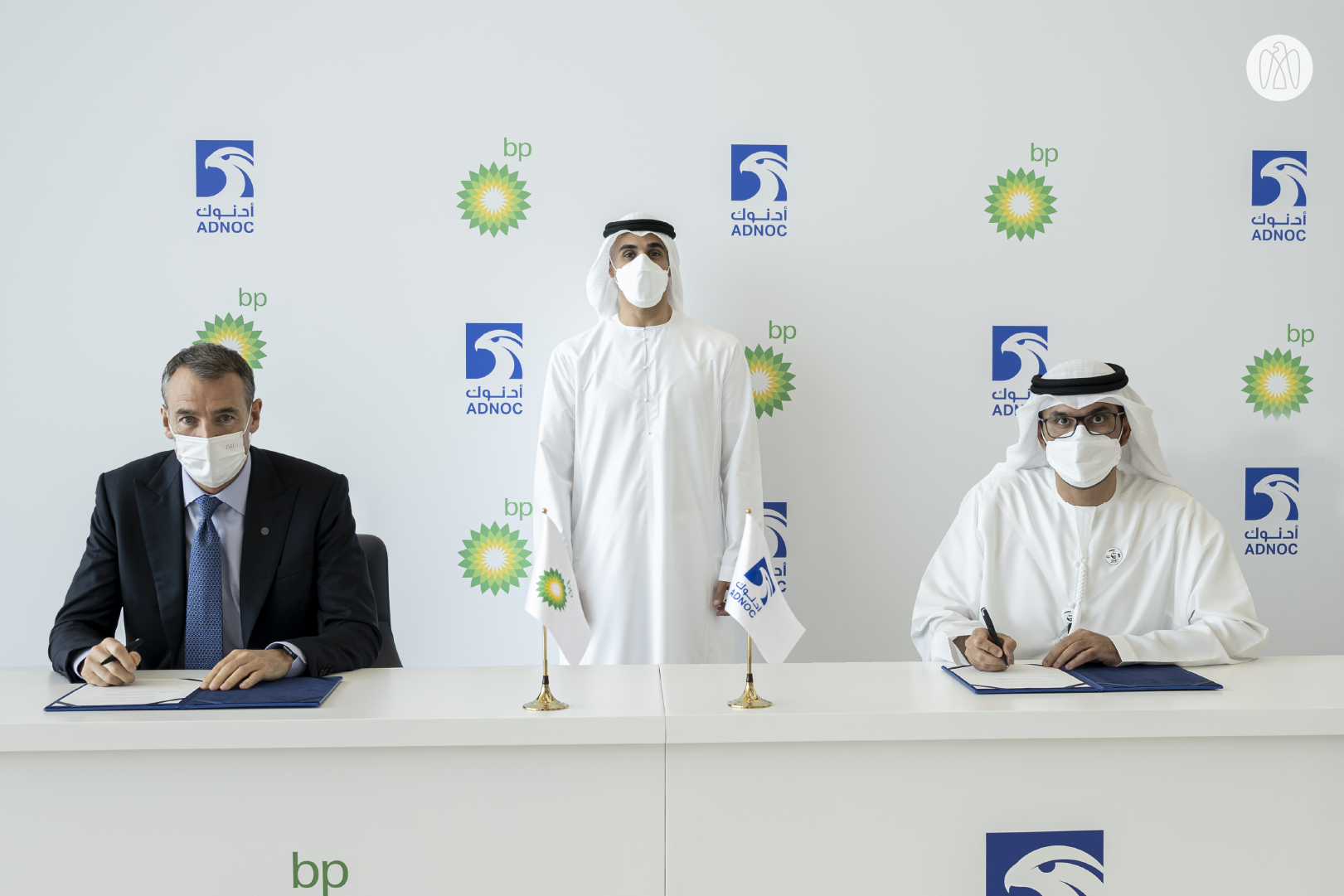
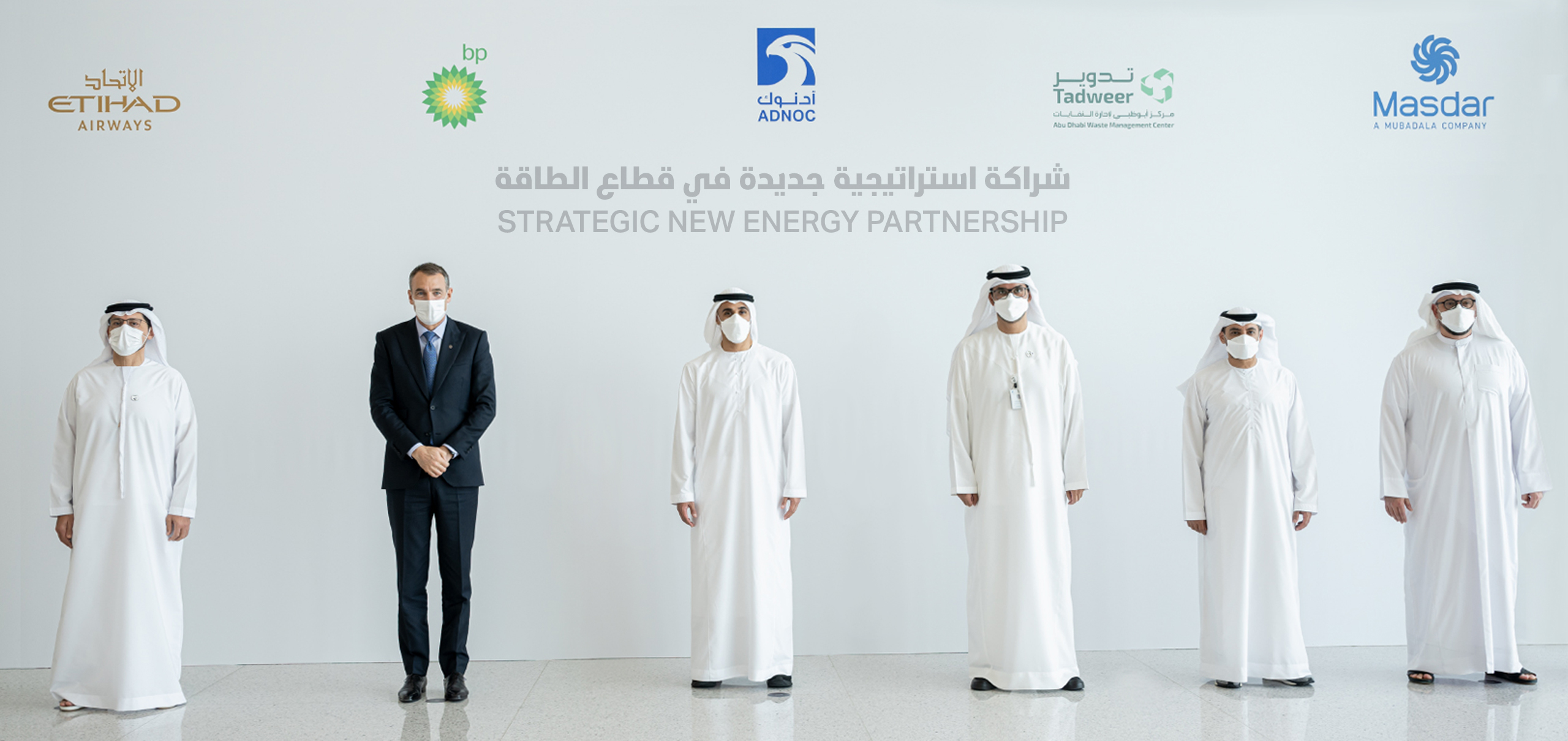
Abu Dhabi, UAE – May 24, 2022: His Highness Sheikh Khaled bin Mohamed bin Zayed Al Nahyan, member of the Abu Dhabi Executive Council, Chairman of the Abu Dhabi Executive Office, and Chairman of the Executive Committee of the Board of Directors of Abu Dhabi National Oil Company (ADNOC), has witnessed the signing of a partnership between Abu Dhabi National Oil Company (ADNOC), bp and Masdar to progress their strategic new energy partnership through the development of clean hydrogen and technology hubs, maximizing opportunities of the energy transition.
In the UK, ADNOC and bp advanced to the design phase (pre-FEED) of the H2Teesside low-carbon hydrogen project, while Masdar and bp signed a Memorandum of Understanding (MOU) to explore potential collaboration on the HyGreen Teesside green hydrogen project in the UK’s Teesside industrial cluster which will be powered by offshore wind.
In the UAE, ADNOC and bp moved to conduct a joint feasibility study for a low-carbon hydrogen project in Abu Dhabi. ADNOC, bp and Masdar also agreed to explore production of Sustainable Aviation Fuels in the UAE using solar-to-green hydrogen and municipal waste gasification, leveraging the capabilities of the UAE’s Tadweer (Abu Dhabi Waste Management Centre) and Etihad Airways.
The companies’ successful progress in developing their new energy partnership builds upon the strategic framework agreements signed during the September 2021 visit to the UK by His Highness Sheikh Mohammed bin Zayed Al Nahyan, President of the United Arab Emirates (UAE).
Commenting on the agreements, H.E. Dr. Sultan Ahmed Al Jaber, UAE Minister of Industry and Advanced Technology, ADNOC Managing Director and Group CEO, and Masdar Chairman, said: “ADNOC and Masdar’s deepened partnership with bp is a testament to the UAE and UK’s longstanding track record of bilateral partnership in sustainability as well as the UAE’s intent to play a leading role in the fast-growing clean hydrogen economy both domestically and internationally. To that end, we welcome the opportunity to collaborate with bp in both the UAE and UK, laying the groundwork for deeper commercial partnership in the area of new energies and clean technologies. In the UK, our role in Teesside will represent ADNOC’s first investment into the UK and help to accelerate innovation in decarbonization of energy in industrial sectors. Similarly, the partners’ collaboration in Abu Dhabi is expected to further position the UAE as a leader in low-carbon energies and technology-driven industrial growth.”
Bernard Looney, bp’s Chief Executive Officer, said: “ADNOC and Masdar’s involvement reinforce the world-leading role that Teesside and the UK more widely can play in leading the development of low carbon hydrogen for low carbon economies. From supply chains to skills, Teesside and bp are ready to deliver. Our partnership with ADNOC and Masdar stretches internationally and will be able to help decarbonize some of the most hard-to-abate sectors in the world – like industrial manufacturing, power and aviation – in a sustainable way. I want to thank H.E. Dr Sultan for his continued commitment to the UAE’s energy transition. Partnerships like this reach beyond borders to provide the new energy solutions the world needs.”
His Excellency Falah Al Ahbabi, Chairman of Abu Dhabi Waste Management Center, Tadweer, said: “The Abu Dhabi Waste Management Center is keen to develop strategic partnerships which align with our ongoing efforts to divert waste from landfills and leverage commercially viable technology solutions to overcome the challenges posed by the treatment of vast volumes of waste. This agreement is a testament to our mutual commitments to sustainability and will boost Abu Dhabi’s and the UAE’s position as a world leader in the realm of green energy.”
Masdar CEO, Mohamed Jameel Al Ramahi, said: “Today’s announcements will strengthen the strategic partnership between Masdar, ADNOC and bp and continue to drive clean energy innovation for both the UAE and the UK. Masdar has been a long-standing investor in the UK’s renewable energy sector, and we will leverage our expertise in offshore wind and sustainable aviation fuels to support both nations’ energy transition while solidifying the UAE’s leadership position in the emerging green hydrogen economy.” Tony Douglas, Group Chief Executive Officer, Etihad Aviation Group, said: “Although aviation is considered one of the harder sectors to decarbonize, meaningful progress can be made if a basket of measures – including both SAF and LCAF – are pursued. We believe that a balanced approach is required, exploring future opportunities for SAF while improving the carbon intensity of hydrocarbon-based aviation fuels. This partnership between ADNOC, bp, Tadweer and Masdar supports Etihad’s SAF and LCAF strategy as key components to reduce carbon emissions until alternative fuels and technologies become fully viable.”
ADNOC and bp’s UK project, H2Teesside, will be co-developed within Teesside, a part of the East Coast Cluster on the Eastern coast of the UK, leveraging access to North Sea gas and bp’s existing CCUS capabilities. End-users of clean hydrogen produced at the planned project are expected to include neighboring large-scale industrial offtakers, such as chemical processors, fertilizer manufacturers and heat and power generators. Similar use cases as well as mobility demand in Teesside will be explored by bp and Masdar in the area of green hydrogen, setting the stage for robust end-to-end green hydrogen value chains.
In the UAE, ADNOC and bp expect to capitalize on Abu Dhabi’s existing industrial infrastructure, significant gas resources, and proximity to future clean hydrogen demand centers to potentially develop a world-scale low-carbon hydrogen facility. In addition, ADNOC, bp and Masdar have welcomed Abu Dhabi’s Tadweer and Etihad Airways to the UAE-UK new energy partnership, further strengthening the UAE’s value proposition within the hydrogen economy. Under the terms of the new agreement, ADNOC, bp and Masdar will leverage Tadweer’s extensive operational experience in circular economy innovations to explore conversion of municipal waste into Sustainable Aviation Fuels for Etihad Airways via gasification powered by solar-to-green hydrogen.
Building on the agreements announced in September 2021, ADNOC, bp and Masdar also deepened their collaboration on critical clean energy technologies, including Smart Decision Centers to support advanced performance management, best-in-class Methane Emissions Detection Platforms and Carbon Capture, Utilization and Storage (CCUS) technology at ADNOC’s Bab field.
The UAE and UK’s expanded new energy partnership closely aligns with the UK’s recently announced commitment to achieve 10GW of low-carbon hydrogen by 2030, and the UAE’s Nationally Determined Contribution of reducing greenhouse gas emissions by 23.5% compared to business as usual for the year 2030. ADNOC, bp and Madsdar welcome the opportunity to contribute to these bold national ambitions and will seek to increase knowledge sharing on new energy policy between the public and private sectors. Employees from the partners will be initially seconded in Abu Dhabi and the UK, while, longer term, the companies hope to increase capabilities to co-develop low and zero-carbon innovations and technology.